
International Council of Museums – The international association of museums is a global organization working for the development of our society. Its main goal is to preserve and protect the world’s cultural heritage.
The ethical code of museums is here
- organization founded in 1946 for professionals in the field of museology
- unique global community of museum professionals (nearly 30,000 members)
- forum of experts from 137 countries responding to the challenges that museums currently face
- 117 national and 31 international committees covering specific museum activities
The International Council of Museums (ICOM) is the only international organization representing museums and museum workers. Since 1946, it has helped its members fulfill their mission, which is to protect and promote cultural heritage. In achieving its goals, it also utilizes the advice of institutional partners.
The organization brings together more than 32,000 members and is made up of national committees representing 136 countries, and international committees uniting museum workers from around the world based on specialization. The ICOM Secretariat is located in the UNESCO building in Paris.
Vision
Museums today are more than ever before the center of cultural, social and economic life of contemporary societies.
They must deal with a multitude of challenges, whether it is the social and political situation or the environment. Museums play a crucial role in the development of society through education and at the same time protect and preserve cultural treasures for future generations.
The vision of ICOM is a world in which national and global cultural heritage receives the deserved attention.
The International Council of Museums ensures the protection and preservation of cultural heritage and its accessibility to the public. It provides humanity with museum collections of immense value. ICOM also supports education, the dissemination of knowledge and the deepening of awareness of the cultural heritage of individual nations.
You can find out more about the history of ICOM here: Link
SK ICOM as one of the national committees of ICOM – the international institution of museums and museum professionals, whose mission is to protect the cultural and natural heritage of humanity, both movable and immovable, and to communicate its value to the public aims to:
- represent the interests of Slovak museums, galleries and other collecting institutions, as well as museum professionals
- set professional and ethical standards for the activities of museums, galleries and collecting institutions in accordance with the ICOM Code of Ethics for Museums, issue recommendations; promote education, specialized knowledge and support the growth of cultural awareness through cooperation programs
- promote the establishment, development and professional management of museums, galleries; organize mutual cooperation and assistance between museums and their staff
- facilitate cooperation, mutual assistance and exchange of information among the members of the organization
- support the expansion of the ICOM membership base from among the staff of museums and galleries in Slovakia
- represent the interests of members to the ICOM General Secretariat, as well as to other professional organizations, museum founders and other institutions
- organize ICOM activities in Slovakia
- cooperate with international ICOM committees and with national and international organizations working in the field of museums or uniting their staff
- you can find the statutes of the Slovak ICOM Committee here.
In the Bulletin of the Association of Museums and Galleries in the Czech Republic, you will find an article about the history of Czechoslovak ICOM: Link to the article
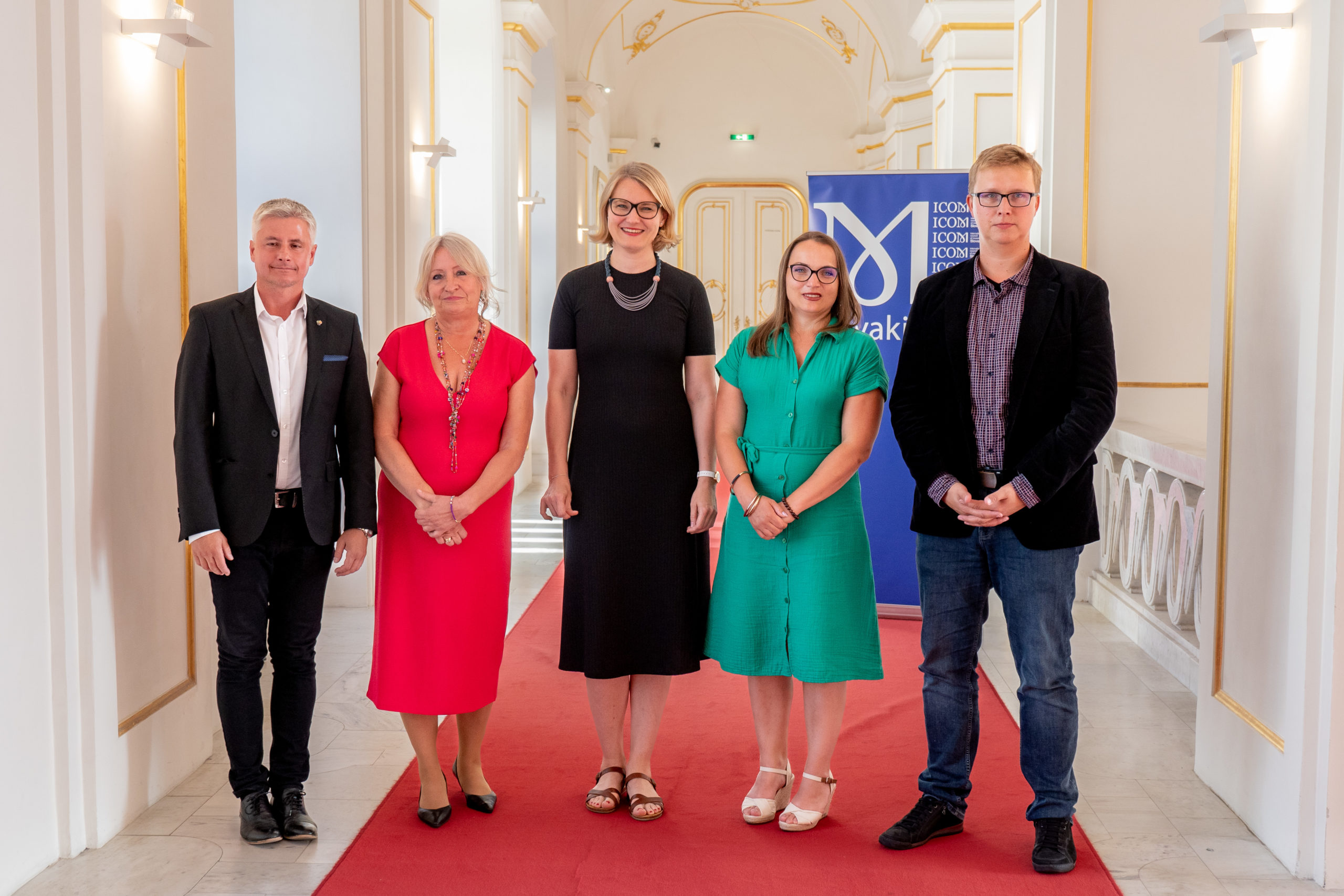
PhDr. Margaréta Musilová
Chairman
Email: margareta.musilova07@gmail.com
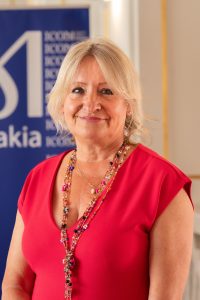 PhDr. Margareta Musilová studied archaeology at the Faculty of Arts of Comenius University in Bratislava. Since 1984, she has been working as an archaeologist at the City Office for the Protection of Monuments in Bratislava. She focuses on urban archaeology and has been and is the coordinator of several international projects related to Celtic and Roman cultural heritage, international conferences, and exhibitions both domestically and abroad. For her work and discoveries, she has received the Annual Award of the magazine Pamiatky a múzeá five times, the Medal of the European Union for Cultural Heritage and Europa Nostra 2002, the Mayor’s Award of the Capital City of the Slovak Republic Bratislava 2015, the Literary Fund 2020, and others. She completed foreign internships in Rome (IT), Carnuntum (A), Washington (USA), and Lausanne (CH).
PhDr. Martin Hrubala, PhD.
Treasurer
martin.hrubala@muzeumpezinok.sk
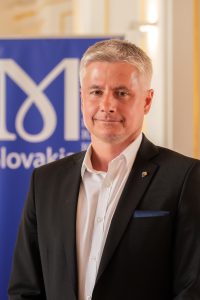 Martin Hrubala studied history at the Department of History of the Faculty of Arts of Trnava University in Trnava. Since 2003, he has been working at the Small Carpathian Museum in Pezinok. In addition to regional history, military events, and auxiliary historical sciences, he focuses on the history of viticulture and winemaking. After receiving a scholarship from the Robert Bosch Foundation (Scholarship Program for Future Leaders from Central Europe / Carl Friedrich Goerdeler – Kolleg), he interned as a trainee at the Falck Historical Museum in Speyer, at the Association of Museums of the Federal Republic of Rhineland-Palatinate in Ludwigshafen, and at the Department of Wine Market and Marketing at the State Winery Oppenheim. Since 2013, he has served as the director of the Small Carpathian Museum in Pezinok. He is the author of two monographs and several professional articles or studies. Under his leadership, the museum significantly contributes to the development and deepening of historical awareness and cultural activities in the Small Carpathian region. He is also active in the field of tourism. He strives to create new exhibitions, modern forms of presentation, or original forms of tasting local wines as a valuable and experiential alternative for spending leisure time. He is a member of the Museum and Gallery Council, the vice-chairman of the Regional Organization of Tourism Small Carpathians, and a member of several committees.
JUDr. Mgr. Tomáš Michalík, PhD.
Secretary
Email: tomas.michalik@gmail.com
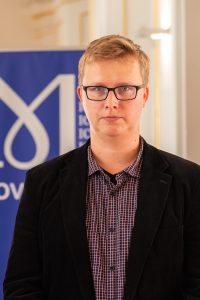 A lawyer and archaeologist with experience in central state administration in the field of cultural heritage protection (Heritage Office of the Slovak Republic 2007-2009, Ministry of Culture of the Slovak Republic 2009-2013). From 2009 to 2012, he was the representative of the Slovak Republic in the European Heritage Legal Forum. Since 2013, he has been working at the Trenčín Museum in Trenčín (partial employment, currently as the deputy director and lawyer) and at the company CULTURAL HERITAGE CONSULTING, s.r.o. At the Academy of Fine Arts, Department of Restoration in Bratislava, he teaches Law for the Protection of Cultural Heritage. Since 2018, he has been a court expert in the field of “Culture”, in the sector of “Archaeology”. He evaluates projects in the field of cultural heritage and research at the Slovak (Creative Industry, EEA and Norway Grants), international (Interreg PL-SK, SK-AT), and European (FP7, EACEA – Culture, Horizon 2020, Marie-Curie Actions) levels. In the academic sphere, he specializes in Paleolithic archaeology, regional archaeology of the Trenčín area, and legal aspects of cultural heritage protection; recently, he has been focusing on modern and contemporary history of Trenčín and the Považie region. He is the author of the monograph “From Tornowa to Turna. Monograph of the village Trenčianska Turná and its local part Hámre. (2019)”
Mgr. Eva S. Kotláriková
členka výboru / Board Member
Email: eva.kotlarikova@sng.sk
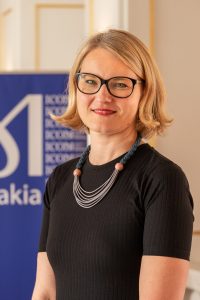 Mgr. et Mgr. Eva S. Kotláriková is a graduate of the Faculty of Arts of Comenius University, majoring in history – Italian language and history of fine arts. From 2007 to 2010, she worked at the Slovak National Museum, and since 2010, she has been employed at the Slovak National Gallery. From her initial involvement in museum and gallery pedagogy, she has gradually developed as a curator. Currently, she works as a senior curator in the section of collections of old art, where she manages the collection of 19th-century graphics. She is currently researching artistic interactions between Italian and Upper Hungarian cultural environments and the research of graphic presentations of the 19th century. She also deals with curatorial overlaps into gallery pedagogy and communication with visitors and publishes in this area as well. Among her exhibition projects, the exhibition See, see, and see! (2019) at the Zvolen Castle, created with artists Jiří Franta and David Böhm, resonated, which she also presented at the annual ICOM conference in Prague in 2022. In collaboration with Ondrej Horák, she curated the exhibition Why (art) is? (2021) for the opening of the newly reconstructed area of the Slovak National Gallery.
PhDr. Katarína Bányászová
Board Member
Email: katarina.banyaszova@snm.sk
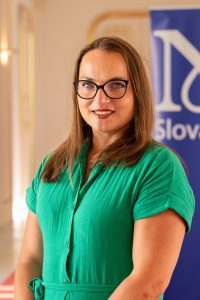 She has been working since 2009 as an archivist at the Archive of the Slovak National Museum, branch in SNM – Museum Betliar. She studied archival science and auxiliary historical sciences at the Faculty of Arts of Prešov University (2008). She has a small doctorate in archival science (2014). She is the founder of the historical photography fund at SNM – Museum Betliar and its curator. She collaborates on exhibitions
at SNM – Museum Betliar. In her practice, she focuses on the everyday life of the aristocracy in the 19th – 20th centuries, mapping the photographic and archival legacies of the Andrássy family and the aristocracy, and is publicly active. She collaborated on the research project of the National Heritage Office of the Czech Republic Historical Photographic Material –
identification, documentation, interpretation, presentation, application, care, and protection in the context of basic types of memorial institutions (2016). She completed archival courses at the Main Archive of the City of Budapest (2023).
- Archeologický ústav SAV
- BIBIANA. Medzinárodný dom umenia pre deti
- Dubnické múzeum
- Fond Výtvarných umení
- Galéria umenia Ernesta Zmetáka v Nových Zámkoch
- Galéria Jána Koniarka v Trnave
- Galéria Miloša Alexandra Bazovského v Trenčíne
- Galéria mesta Bratislavy
- Galéria slovenského rozhlasu
- Liptovské múzeum
- Literárne múzeum
- Maďarský kultúrny inštitút
- Malokarpatské múzeum v Pezinku
- Múzeum mesta Bratislavy
- Múzeum Divadelného ústavu
- Múzeum mincí a medailí v Kremnici
- Ľubovnianske múzeum
- Nitrianska galéria
- OverheadAD
- Pamiatkový úrad Slovenskej republiky
- Slovenská národná galéria
- Slovenské banské múzeum
- Slovenské centrum dizajnu
- Slovenské národné múzeum
- Slovenské technické múzeum
- Spolok výtvarníkov Slovenska
- Stredoslovenská galéria v Banskej Bystrici
- Tatranská galéria Poprad
- Trenčianske múzeum v Trenčíne
- ÚĽUV. Ústredie ľudovej umeleckej výroby
- Ústav technológií a inovácií
- Vojenský historický ústav
- Východoslovenské múzeum v Košiciach
- Záhorská galéria Jána Mudrocha v Senici
- Západoslovenské múzeum v Trnave
- Zemplínske múzeum v Michalovciach
Definition of a museum approved on 24. 8. 2022 at the General Conference ICOM PRAGUE 2022
“A museum is a not-for-profit, permanent institution in the service of society that researches, collects, conserves, interprets and exhibits tangible and intangible heritage. Open to the public, accessible and inclusive, museums foster diversity and sustainability. They operate and communicate ethically, professionally and with the participation of communities, offering varied experiences for education, enjoyment, reflection and knowledge sharing.”
The full text can be found here: https://icom.museum/en/resources/standards-guidelines/museum-definition/